Introduction
When it comes to building a high-performance FPV (First Person View) drone, selecting the right materials is just as important as choosing your flight controller or motors. Two materials dominate the industry: Carbon Fiber and TPU (Thermoplastic Polyurethane).
But it’s not a matter of which one is "better"—it’s about how they work together. In this guide, we’ll break down the strengths and weaknesses of each and how we use them at MechFPV to create the ultimate flight experience.
Carbon Fiber: The Backbone of Your Drone
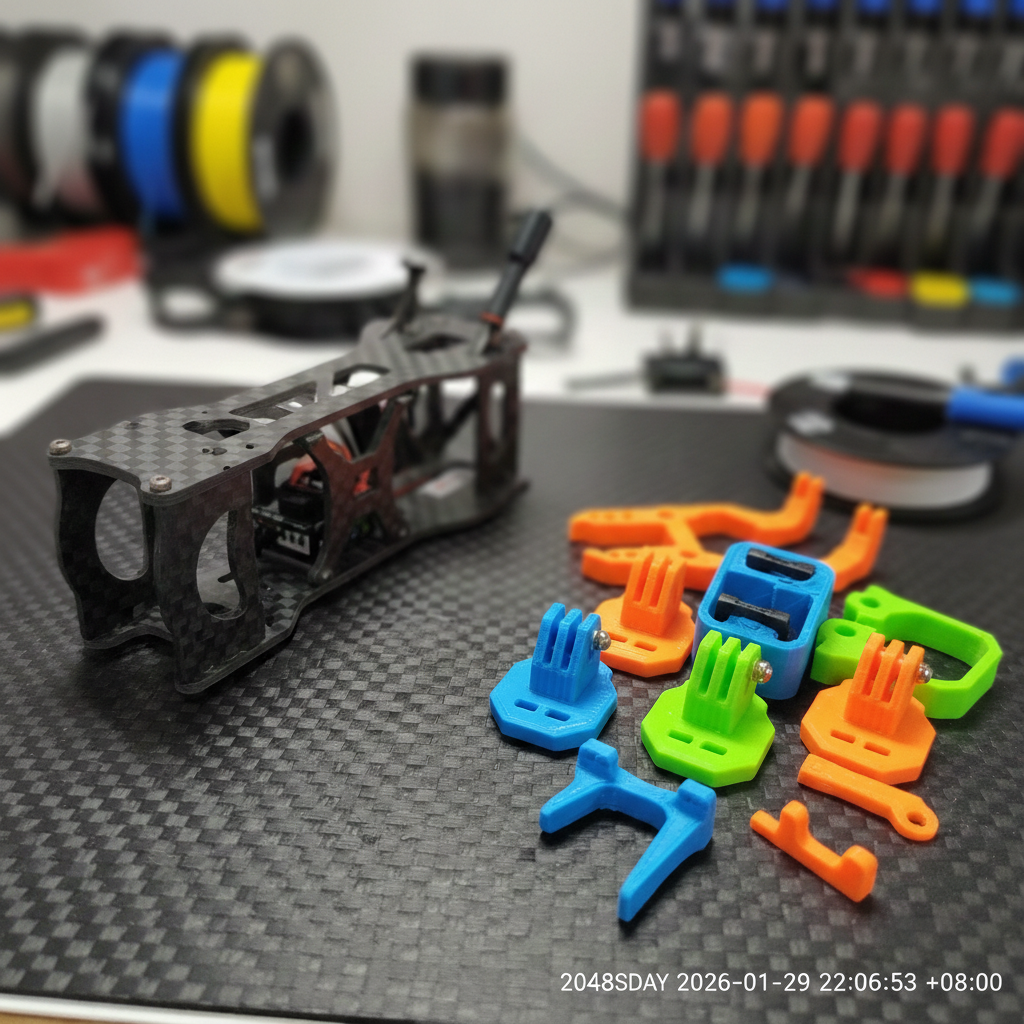
Carbon fiber is the gold standard for drone frames, and for good reason. It provides the structural integrity needed to handle high-speed maneuvers and powerful motors.
The Pros:
- Extreme Rigidity: Carbon fiber plates (especially the high-quality 3K plates we source in Shenzhen) don't bend. This stiffness ensures that motor vibrations are handled correctly by the gyro.
- Lightweight Strength: It has a higher strength-to-weight ratio than steel, making it ideal for racing and freestyle frames.
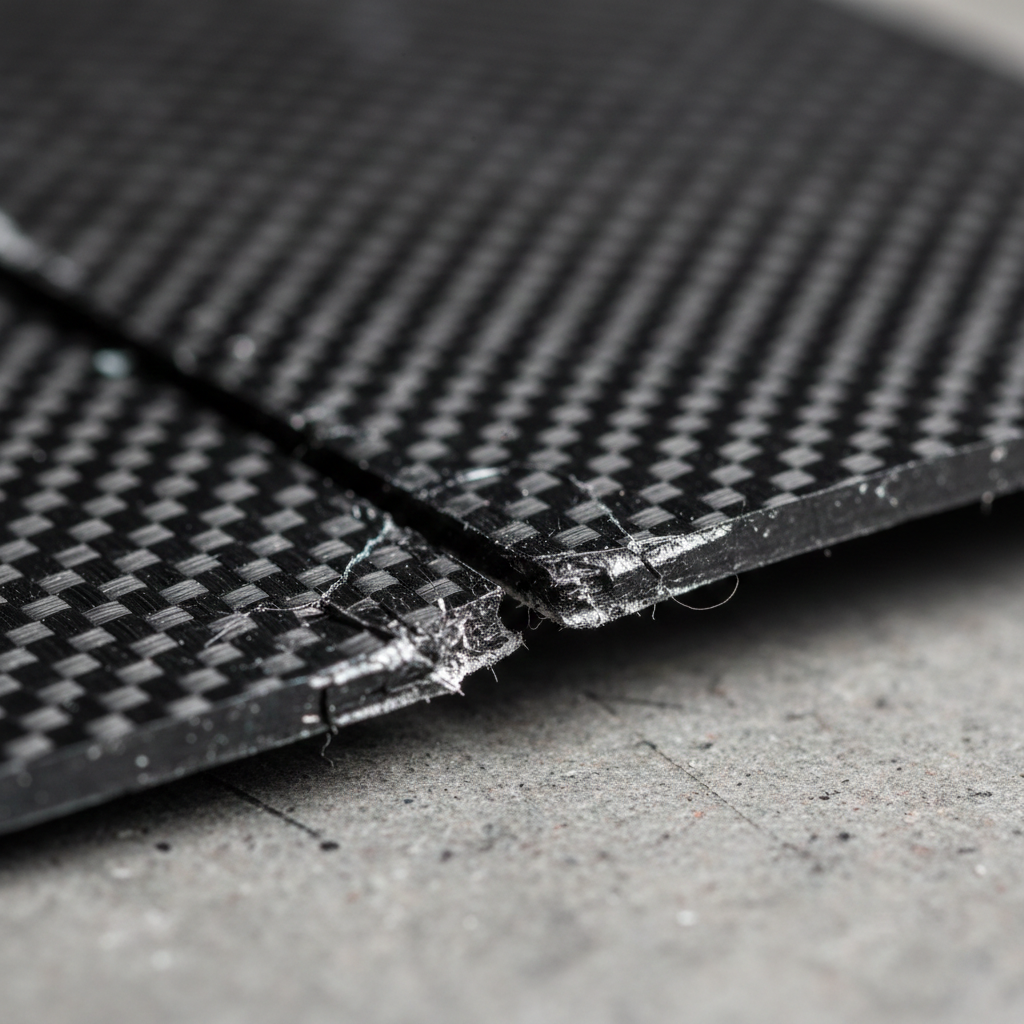
- Durability: While it can snap under extreme impact, it generally survives high-speed crashes that would shatter other materials.
The Cons:
- Conductivity: Carbon fiber conducts electricity. If a live wire touches your frame, it can short out your electronics.
- Signal Interference: It can shield RF signals, meaning you need to position your antennas carefully.
TPU: The Protective Shield
TPU is a flexible, rubber-like plastic that is almost always 3D printed. In the FPV world, it’s used for mounts, bumpers, and protective sleeves.
The Pros:
- Impact Absorption: TPU is incredibly "bouncy." It absorbs energy from crashes, protecting expensive components like your GoPro or DJI Air Unit.
- Flexibility: It can be stretched and squeezed, making it perfect for antenna mounts that need to survive gates and branches.
- Vibration Damping: TPU acts as a cushion, reducing high-frequency vibrations that can cause "jello" in your HD footage.
The Cons:
- Zero Structural Support: You cannot build a frame out of TPU; it’s too floppy.
- Weight: If overused, 3D printed TPU parts can quickly add "dead weight" to your build.
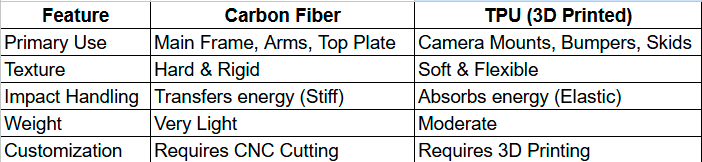
The Comparison Table
Conclusion: The Perfect Marriage
In modern FPV design, you don't choose between them—you combine them. At MechFPV, we recommend a rigid 3K Carbon Fiber base (typically 4mm to 6mm for arms) supplemented with TPU 3D prints for:
- Action Camera Mounts (to get smooth footage).
- Arm Protectors (to keep your carbon fiber from delaminating on concrete).
- Antenna Holders (to ensure the best signal angle).
Need Custom Parts?
Whether you need high-precision CNC Carbon Fiber cutting or bulk Propellers, MechFPV provides factory-direct parts from Shenzhen.
#DIY FPV Drone