Content:
Title: High KV vs. Low KV: How to Stop Burning Your Motors
You’ve bought a shiny new frame. Now comes the confusing part: 1750KV? 2550KV? And why does putting a 5-inch prop on a high KV motor result in "magic smoke"?
In the FPV world, KV does not mean Kilovolts. It stands for "Constant Velocity"—essentially, how many RPMs the motor spins per volt.
The Golden Rule of Physics:
- High KV (e.g., 2550KV): Spins very fast but has less torque. It needs light, small propellers (like 3-inch or light 5-inch). Think of it like a Ferrari engine—fast, but can't tow a trailer.
- Low KV (e.g., 1700KV): Spins slower but has massive torque. It can swing heavy, aggressive propellers without overheating. Think of this as a diesel truck.
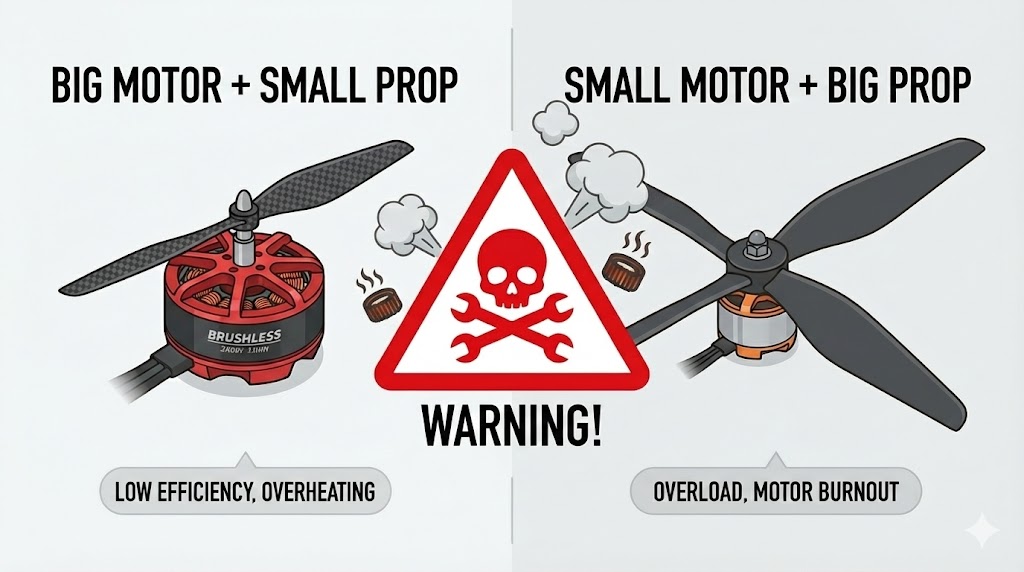
Common Mistakes to Avoid: If you put a heavy, high-pitch propeller on a high KV motor, the motor tries to spin faster than it has the strength for. The result? Heat. Massive heat. And eventually, a burnt winding.
Our Recommendation: For a standard 5-inch freestyle build on 6S battery, the sweet spot is usually 1700KV - 1900KV